Halloween Film Photography in Louisville — Moody Analog Portraits and Atmospheric Street Shots in Kentucky
TK Broecker / 11 October 2026
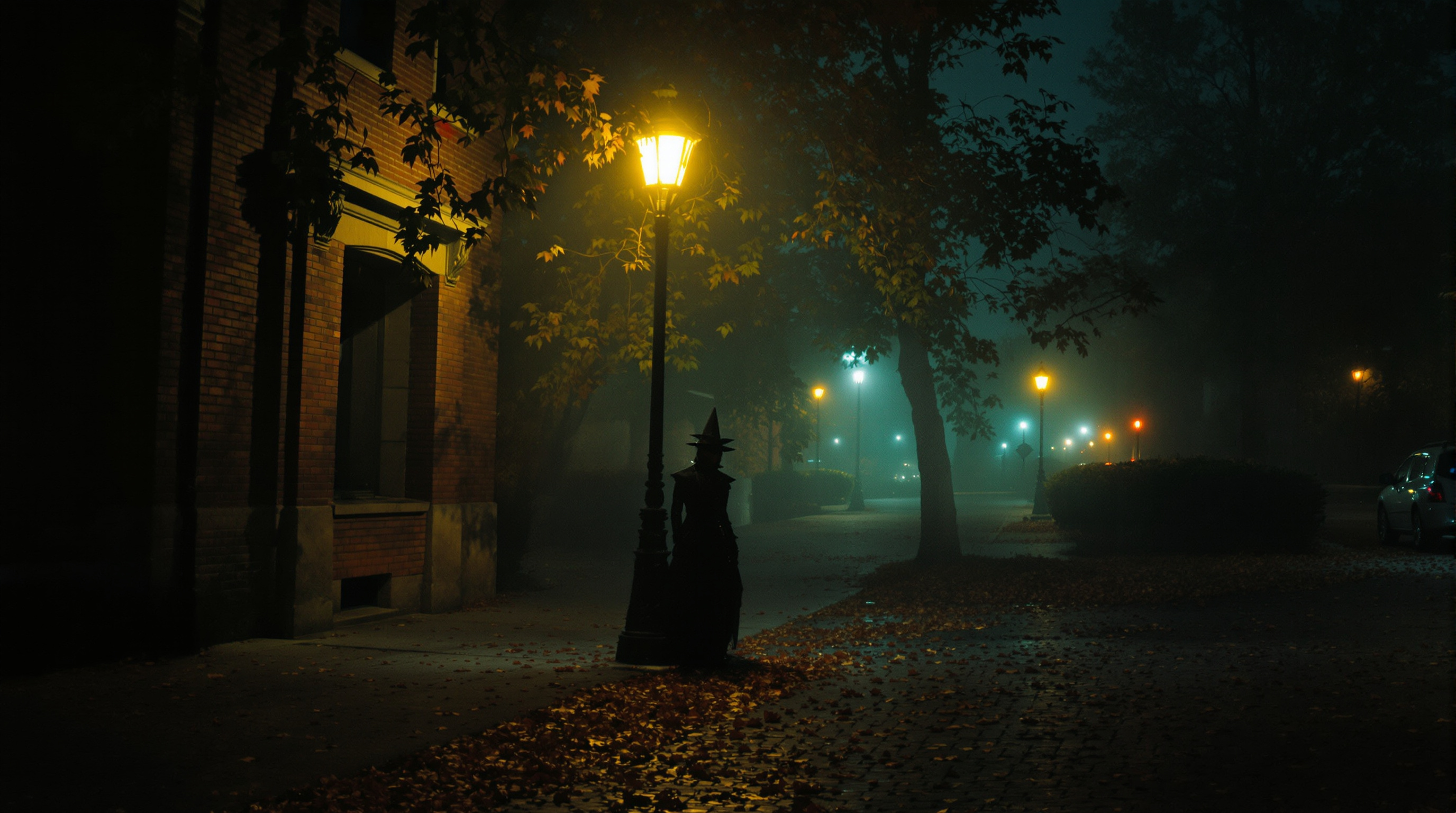
Halloween and film photography share something rare: an obsession with atmosphere, texture, and the feeling that something is slightly out of the ordinary. Louisville, Kentucky — with its Victorian architecture, gas-lit streets, fog-prone Ohio River valley, and deep tradition of theatrical Halloween celebrations — offers analog photographers one of the most visually rich environments in the American Midwest. Whether you're hunting for moody portraits or ghostly street scenes, shooting film on Halloween night in Louisville is an experience like no other.
Why Louisville Is a Perfect Halloween Film Photography Location
Louisville's architectural character plays a central role in setting the mood. Neighborhoods like Old Louisville — the largest Victorian preservation district in the United States — offer a stunning backdrop of late 19th-century mansions, ornate ironwork, and deep shadow-filled alleyways. The area hosts haunted house tours annually and draws thousands of costumed visitors, giving analog photographers a steady stream of subjects framed against genuinely historic, hauntingly beautiful architecture.
The Ohio River's proximity to the city contributes to frequent ground fog during October evenings, a meteorological gift to film photographers. This natural diffusion softens light sources, halos street lamps, and adds an organic, unpredictable atmosphere that no digital filter can truly replicate. The city's mixed lighting environment — sodium vapor street lamps, neon signs, flickering jack-o'-lanterns — creates a complex color palette that responds to film emulsion in fascinating and unpredictable ways.
Choosing the Right Film Stocks for Halloween Night Shooting
Film stock selection is arguably the most important creative decision when shooting in low light Halloween environments. Each emulsion reacts to the available light differently, and the wrong choice can mean muddy shadows with no detail or blown-out highlights on costume reflective materials.
- Kodak Portra 800: The gold standard for low-light color film. Its fine grain structure at ISO 800 — and its forgiving latitude when pushed to 1600 — make it ideal for portrait work in mixed artificial light. Skin tones remain warm and natural even under orange sodium vapor lamps, which is critical for Halloween portrait sessions.
- Ilford HP5 Plus (pushed to 3200): For black-and-white work, HP5 is legendary for its pushability. Pushed two stops to 3200, it renders Halloween scenes with dramatic grain, deep blacks, and high contrast — exactly the aesthetic that suits the night. The grain at this speed becomes almost a visual character of its own.
- Kodak T-MAX P3200: A natively fast film designed for available-light shooting. Unlike HP5 pushed, T-MAX P3200 retains finer grain at high ISOs due to its tabular grain structure. It's excellent when you want maximum shadow detail on a dark Louisville street corner.
- Cinestill 800T: Derived from Kodak Vision3 500T motion picture film, Cinestill 800T is tungsten-balanced, meaning it renders artificial light scenes with naturally cool, cinematic tones — except for the characteristic halation glow around light sources caused by the removal of the rem-jet backing layer. On Halloween night, every candle flame and street lamp becomes a blooming orb of light, adding an otherworldly quality to your frames.
Techniques for Shooting Film at Night and in Low Light
Shooting film at night requires a fundamentally different mindset than daytime photography. Reciprocity failure — the phenomenon where film's sensitivity drops non-linearly during very long exposures — must be accounted for on slower stocks. For faster films like HP5 or Portra 800, exposures up to several seconds remain manageable, but always carry a small flashlight to read your light meter accurately in the dark.
For Halloween portrait work, consider using a fast prime lens — a 50mm f/1.4 or f/1.8 is ideal. Wide apertures allow more light to hit the film plane and create that signature shallow depth of field that separates your subject from a blurred, bokeh-rich background of costume details and atmospheric street clutter. In Louisville's Old Louisville district, position your subject near a lit porch lamp or a cluster of jack-o'-lanterns to use practical light sources creatively.
For street photography, the zone focusing technique is invaluable at night. Pre-focus your lens at a set distance — typically 8 to 10 feet — so you can shoot quickly without hunting for focus in dim conditions. Shoot from the hip, be patient, and let the scene come to you. Halloween street photography is about capturing fleeting, authentic moments: a child's costume billowing in the wind, a group of friends laughing under a gas lamp, a lone figure disappearing into fog.
A light meter remains essential even with fast film. Many experienced film photographers use a handheld incident meter for portrait sessions to ensure accurate exposure of the subject's face, then rely on the film's latitude to handle highlights and shadows naturally. Louisville's mixed lighting can easily fool a camera's built-in reflective meter.
Building a Consistent Moody Aesthetic for Your Louisville Halloween Portfolio
Beyond technical choices, developing a recognizable visual style is what elevates Halloween film photography from snapshot to art. Louisville offers several consistent visual elements you can lean into deliberately across your portfolio:
- Fog and haze — Embrace it. Shoot toward light sources to maximize atmospheric scatter. Let fog obscure the edges of your frame.
- Layered depth — Victorian architecture gives you natural foreground elements like wrought-iron fences, porch columns, and bare tree branches. Use them to frame your subject and add depth.
- Color temperature contrast — The cool blue of moonlight or open sky against the warm amber of artificial lighting creates natural visual tension that film captures organically.
- Deliberate grain — Don't try to minimize grain at high ISOs. Embrace it as part of the Halloween aesthetic. Push your film, develop normally or even slightly underdevelop to control contrast, and let the grain texture tell part of the story.
When developing your negatives, consider pulling development slightly even on pushed film if you want to retain shadow detail in deep nighttime scenes. Many Louisville-area film labs and darkroom communities can advise on custom development times that suit your creative vision.
Conclusion
Halloween film photography in Louisville, Kentucky is a pursuit that rewards patience, preparation, and a willingness to embrace the unpredictable. The city's Victorian streets, river fog, and vibrant Halloween culture create a naturally cinematic environment that analog film captures with a depth and texture no digital medium can fully replicate. Choose your film stock wisely, know your low-light techniques, and let Louisville's atmosphere do the rest — your frames will speak for themselves.